6 Sep 2026
Tracing Regulatory Shifts in Cross-Border Digital Wagering Markets
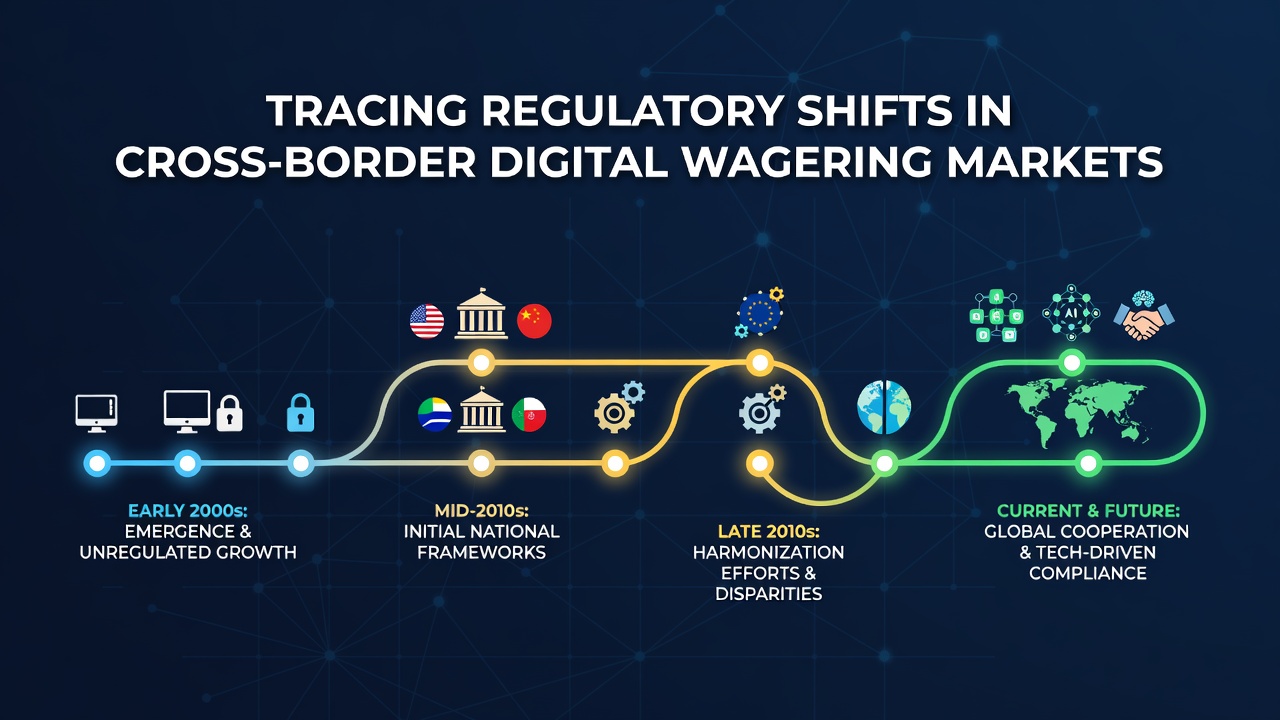
Cross-border digital wagering markets have undergone substantial regulatory evolution since the early 2010s, driven by rapid technological integration adn expanding operator networks that span multiple jurisdictions. Governments and international bodies have adjusted licensing protocols, data-sharing agreements, and enforcement mechanisms to manage these flows while maintaining oversight of taxation and player safeguards.
Initial Frameworks and Regional Divergence
Early regulatory efforts focused on establishing basic licensing structures within individual countries, yet operators quickly expanded across borders through server relocations and affiliate models. In the European Union, directives on electronic commerce and services created pathways for operators licensed in one member state to serve users in others, although national variations in tax rates and age verification persisted. Observers note that this patchwork approach prompted calls for greater harmonization, particularly after several high-profile disputes over market access rights.
Outside Europe, Australia introduced reforms through its Interactive Gambling Act amendments, which clarified prohibitions on certain offshore offerings while allowing domestic licensed platforms to operate under strict advertising rules. Canadian provinces meanwhile developed their own frameworks, with Ontario establishing an open market in 2022 that required operators to register locally even when serving cross-border traffic from other regions. Researchers tracking these changes have documented how such regional differences influenced operator strategies around compliance investments and market entry timing.
Key Shifts in Enforcement and Technology Integration
By the mid-2020s, regulators began incorporating advanced monitoring tools such as geolocation verification and blockchain-based transaction tracking to address unauthorized access across borders. Data from industry reports indicate that these technologies reduced instances of unlicensed play in monitored markets, although enforcement gaps remained in less coordinated regions. European authorities coordinated through the European Gaming and Betting Association to share intelligence on suspicious activities, while Australian regulators strengthened partnerships with payment processors to block transactions tied to prohibited sites.

What's interesting is how September 2026 has been flagged by several oversight bodies as a milestone period, with proposed updates to cross-border reporting standards expected to take effect around that time. These adjustments aim to standardize player fund segregation requirements and introduce mandatory risk assessments for operators handling international traffic. Figures from preliminary consultations reveal that compliance costs for multi-jurisdictional firms could rise notably under the new protocols, prompting some operators to consolidate their licensing footprints in fewer hubs.
Challenges in Taxation and Consumer Protection
Taxation remains one of the most contested areas, as jurisdictions compete to attract operators while seeking revenue from cross-border activity. Some countries apply point-of-consumption taxes that require operators to remit based on player location rather than headquarters, creating complex reconciliation processes. Academic studies on these models show mixed outcomes, with higher compliance burdens for smaller operators and occasional disputes over double taxation between neighboring states.
Consumer protection measures have also evolved, incorporating unified self-exclusion databases that span multiple countries and mandatory responsible gambling features displayed consistently across platforms. Yet gaps persist where regulatory philosophies differ sharply, such as varying approaches to bonus structures or advertising limits. Those tracking enforcement actions report that collaborative agreements between agencies have helped close some loopholes, particularly in cases involving unlicensed offshore operators targeting restricted markets.
Emerging Trends and Future Coordination
Recent developments point toward greater use of international forums for aligning standards, including discussions on artificial intelligence applications in fraud detection and real-time monitoring. Trade associations and research institutions have contributed data showing that markets with clearer cross-border rules tend to attract more established operators and generate steadier tax returns. At the same time, emerging markets in Asia and Latin America are experimenting with hybrid models that blend local licensing with limited allowances for foreign platforms under reciprocal agreements.
These patterns suggest that regulatory shifts will continue to emphasize interoperability between systems while addressing concerns around money laundering and underage access. Organizations such as the Australian Communications and Media Authority have shared case studies on successful blocking mechanisms that other regions now reference during policy reviews.
Conclusion
Regulatory shifts in cross-border digital wagering markets reflect ongoing efforts to balance market access with oversight across diverse legal landscapes. As frameworks mature through 2026 and beyond, data sharing and technological tools are likely to play larger roles in enforcement, while operators adapt to unified reporting and protection standards. Continued coordination among regional authorities will determine how effectively these markets evolve in the coming years.